From Shape-Up to Lights Out: What a Smooth Day at the Hall Looks Like
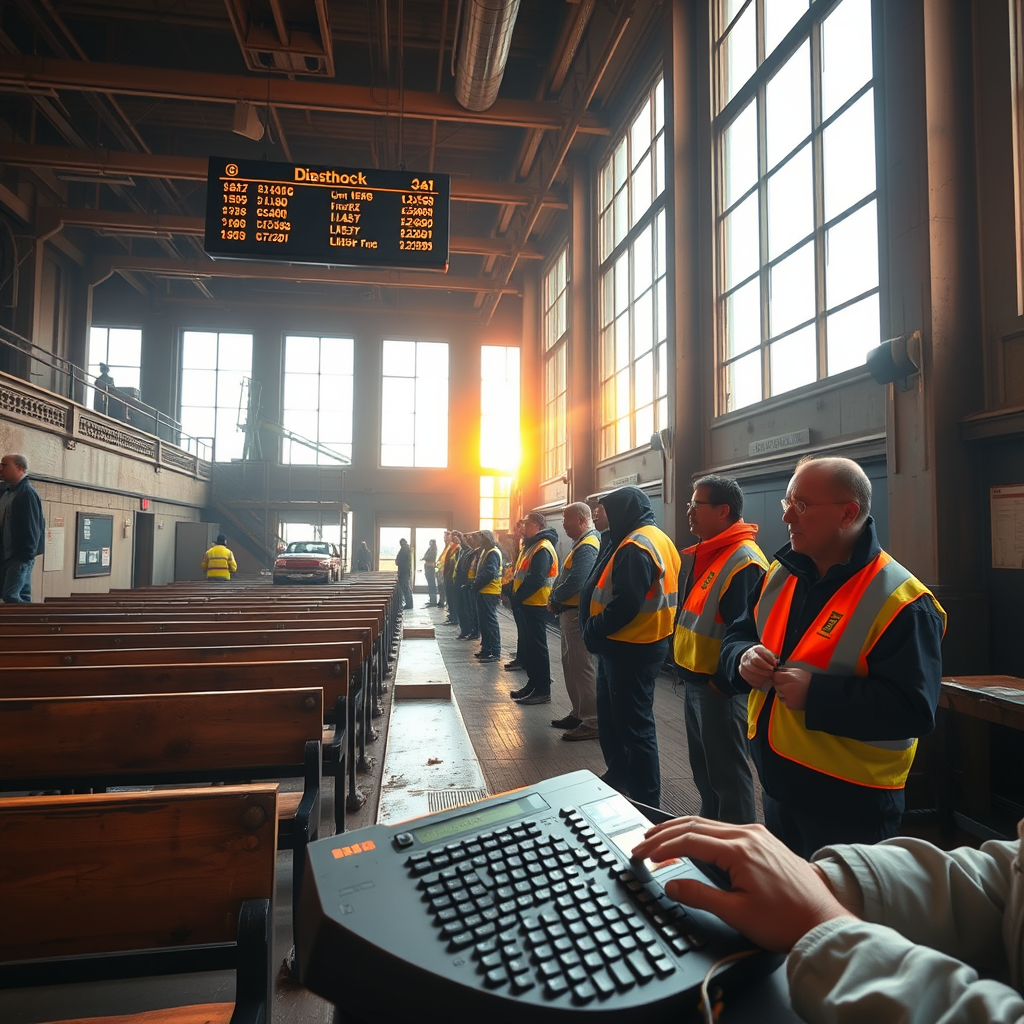
Ask anyone who has worked a dispatch window what a good day looks like and you'll hear some version of the same answer: the calls got filled, the right people got dispatched in the right order, nobody had to argue about it, and the paperwork was done before the lights went off. That's it. No drama is the goal.
What makes that happen isn't speed at the window. It's the sequence of small, ordinary steps that run from early morning to close — each one done the same way every day, so the record at the end of the day actually matches what happened. Here's what that arc looks like, start to finish.
Before the Doors Open
The work that saves a shape-up happens before anyone walks in. Hall staff look at what's coming: the calls that came in from employers, how many gangs are needed, what classifications and certifications each call requires, and what's left over from yesterday.
The lists get a look too. Who moved status overnight? Whose certification expired? Who came off a grace period, and who went on one? A list that was accurate Friday isn't automatically accurate Monday. Five minutes of review here prevents the kind of mid-shape-up correction that makes everyone in line nervous.
If the local runs a dashboard, this is when someone reads it — not to admire it, but to spot the one thing that's off before it becomes the day's problem.
Check-In and the Shape-Up
Check-in is the hinge of the whole day. Members check in, the system records who is present and available, and that record becomes the basis for who gets called. It's also the record that protects a member later, when a question comes up about availability on a given day.
The shape-up itself should be boring in the best sense. Dispatch works the list in order: seniority first, then the certification and classification requirements of the call, then down the line until the gang is filled. Passes, no-shows and skips each get recorded as what they actually were, because they don't mean the same thing and shouldn't look the same in the record.
When the order is visible and the reason for every skip is written down, the shape-up explains itself. Nobody has to take anyone's word for it.
The Middle of the Day
After the morning rush, the hall shifts into the second half of its job: administration. Late calls come in and get filled. Members stop by with questions about hours, standing, dues or a record that doesn't look right. Business agents need to know who was dispatched where.
This is also when member-record changes get handled — an address update, a status change, a certification added after a class. Those changes should go through review and approval rather than straight into the record. It isn't bureaucracy for its own sake. It's what makes the record something the local can stand behind six months from now.
A short midday checklist most halls can use:
- Every call that came in is either filled, in progress, or documented as unfilled
- Every skip, pass and no-show from the shape-up has a reason attached
- Pending member-record changes are routed to whoever approves them
- Dues questions raised at the window are logged, not just answered verbally
- Any discrepancy noticed today is written down while the detail is fresh
Closing the Day
The close is where a good day either gets locked in or quietly unravels. Dispatches get confirmed. Open items get flagged for tomorrow. Anything that didn't resolve — a call nobody could fill, a certification question, a dues flag — carries forward with a note rather than disappearing.
A clean daily close is what makes the weekly close short instead of painful. And a clean weekly close is what makes a payroll reconciliation possible later, because reconciliation compares what the hall says was worked against what was reported. If the hall's own side of that comparison is messy, the comparison can't carry much weight.
Why the Routine Matters More Than Any Single Step
None of this is complicated. The difficulty is consistency — doing it the same way when it's raining, when two dispatchers are out, when the calls come in late and everyone's rushed. The halls that run smoothly aren't the ones with the most elaborate process. They're the ones where the process is simple enough to hold up on a bad morning.
That's also why a system has to bend to the hall, not the other way around. Locals differ on how they order lists, how they handle passes, who approves what, and when the week closes. DockOps is set up around how each local already works — the same dispatch rules, the same approval chain, the same closing rhythm — so the software records what the hall does instead of asking the hall to do something new.
A smooth day isn't the absence of problems. It's having a record good enough that the problems are obvious, early, and fixable.
— The DockOps Team
See how DockOps would fit your local — book a demo at dockops.app/book.