Filling a Gang: Working Down the List When Certifications Narrow the Field
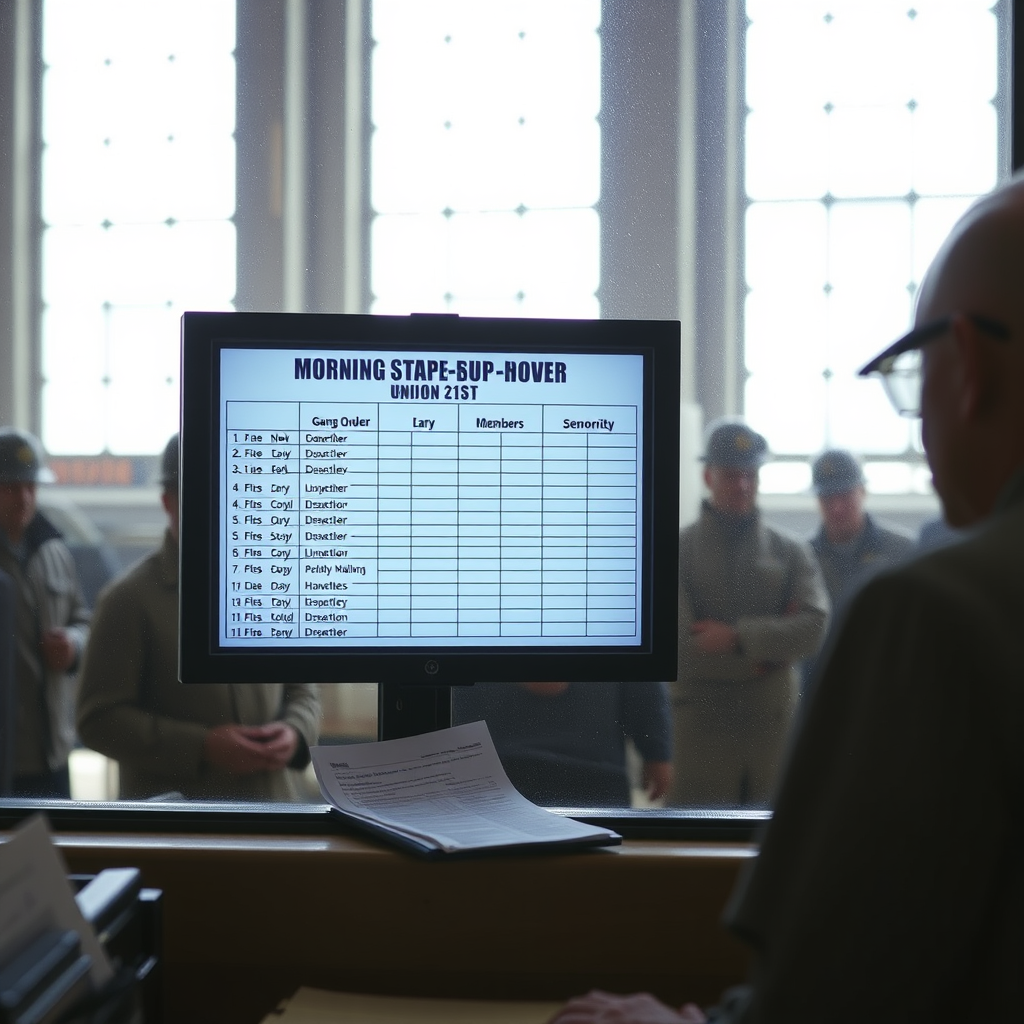
An order comes in for a gang. It is not a request for a headcount — it is a request for specific positions, and some of those positions can only be filled by members who hold a particular certification or qualification. The dispatcher has a list in seniority order and a set of slots that don't all accept the same people. Getting from one to the other, fairly and quickly, is most of the skill in dispatch.
When it goes well, nobody notices. When it goes wrong, the questions come later: why was I passed over, why did a member below me get that job, why does my rotation position look different than I expected. Those questions are answerable — but only if the dispatch was built in an order that can be retraced.
The order defines the slots before the list does
Before anyone works down the list, the order has to be understood in the local's own terms. How many members, in what positions, with what qualifications attached to which positions, starting when, and for how long. A gang is a structure, not a pile.
The mistake that causes the most trouble is treating a qualified position as if it were a general one. If a slot requires a certification, the field of eligible members for that slot is smaller than the field for the gang as a whole. Filling the general positions first and then discovering the qualified slot has no eligible member left in reach means unwinding work that members have already been told about.
Most experienced dispatchers handle this by reading the order from the narrowest requirement outward — fill the slots with the smallest eligible pool first, then the open positions. The seniority order never changes; what changes is which slot each member is being considered for.
Seniority sets the order, certification sets eligibility
These two things get blurred together in conversation, and keeping them separate is what makes a dispatch defensible.
Seniority determines the order in which members are considered. Certification determines whether a member is eligible for a particular slot at all. A member without the required certification for a qualified slot isn't being passed over on that slot — they were never in the eligible pool for it, and they should remain in position for the next general opportunity that fits them.
That distinction matters because it decides what happens to rotation. A member who declines a job they were eligible for is treated differently than a member who simply wasn't eligible for the slot being filled. If the system records both the same way, rotation drifts and standing gets quietly distorted. Each local defines these rules its own way, and the record has to reflect that local's definitions rather than a generic one.
Where gangs get complicated
A few recurring situations make an otherwise clean dispatch messy:
- A member holds the needed certification but it has expired or is close to expiring, and nobody noticed before the shape-up.
- A member is in good order on the list but has a status flag — grace period, restriction, leave — that affects availability.
- The order changes after the gang is partly filled: a position is added, dropped or retimed.
- One member can cover two different qualified slots, and placing them in the wrong one leaves the other unfillable.
- The gang can't be completed from the primary list and the local's rules call for moving to a call-back or secondary list.
None of these are unusual. What separates a hall that absorbs them from one that scrambles is whether certification status, member status and list position are all visible in the same place at the time of dispatch — not in a binder someone has to go find.
Record why, not just who
The dispatch record should let someone reconstruct the morning weeks later. That means capturing, for each slot, who was dispatched, what the slot required, who was considered and skipped, and the reason for each skip in the local's own categories. "Skipped" with no reason is the entry that causes arguments.
When the record carries the reason, a member's question gets a short, factual answer instead of a reconstruction from memory. It also means rotation position after the dispatch reflects what actually happened, so the next order starts from accurate ground.
Set up around how your local already works
No two locals define gang composition, certification requirements, pass rules or list movement identically, and they shouldn't have to. DockOps is configured to the local's existing dispatch rules — the positions, the qualifications that attach to them, the skip categories, the order of lists — rather than asking the hall to change how it dispatches to fit the software. The goal is a faster morning and a record that still holds up when someone asks about it in March.
— The DockOps Team
See how DockOps would fit your local — book a demo at dockops.app/book.