"I Should Have Gone Out." Now There's an Answer.
"I should have gone out."
Every dispatcher has heard it. Every business agent has had to answer it. And at most halls, the answer depends on memory: who was in the room, what was said, who remembers it the same way.
That's a hard place to run a hiring hall from. Not because dispatchers aren't fair, but because fairness that can't be shown is fairness that can always be questioned.
DockOps turns that question into one with an answer.
Fair isn't enough. It has to be visible.
Dispatch is the heartbeat of a longshore local. It's where seniority stops being a number on a list and becomes a job, a shift, a paycheck. It's also where trust is won or lost.
The traditional tools of dispatch (a voice at the window, a whiteboard, a binder, a phone tree) were built for a world where everyone was in the same room. They can be perfectly fair. But they leave very little behind. When a member challenges a pick a week later, there's often nothing to pull up.
The paradigm shift is simple: dispatch should leave a record, and members should be able to see it happen.
Every pick on record
In DockOps, every dispatch decision is recorded as it's made. Every assignment, override, replacement and headcount change keeps who made it, the reason and the history.
When a member asks why they didn't go out, the local doesn't need to reconstruct the morning. It pulls the record. The call-back list order, who checked in and when, which gang needed which certification, who was assigned and who made the call: it's all there.
That protects members, who get a real answer instead of a shrug. And it protects dispatchers, who can show their work instead of defending their memory.
Your seniority rules, enforced the same way every time
DockOps doesn't change how seniority works at your local. It enforces the rules your local already has.
Seniority order, eligibility and certification requirements are set up with your local and applied automatically during staffing. Gangs are configured with headers, subheaders and the roles the job requires. As members are assigned, DockOps applies seniority order and checks certification eligibility, so an ineligible member can't be placed into a role that requires a credential they don't hold.
The local keeps control of what those rules are and who can override them. When an override is needed, and there are always real-world reasons, it's made by someone with the authority to make it, and it's recorded.
Consistency is the point. The same rules on Monday as on Friday, for the first gang and the last.
The flow board: dispatch everyone can watch
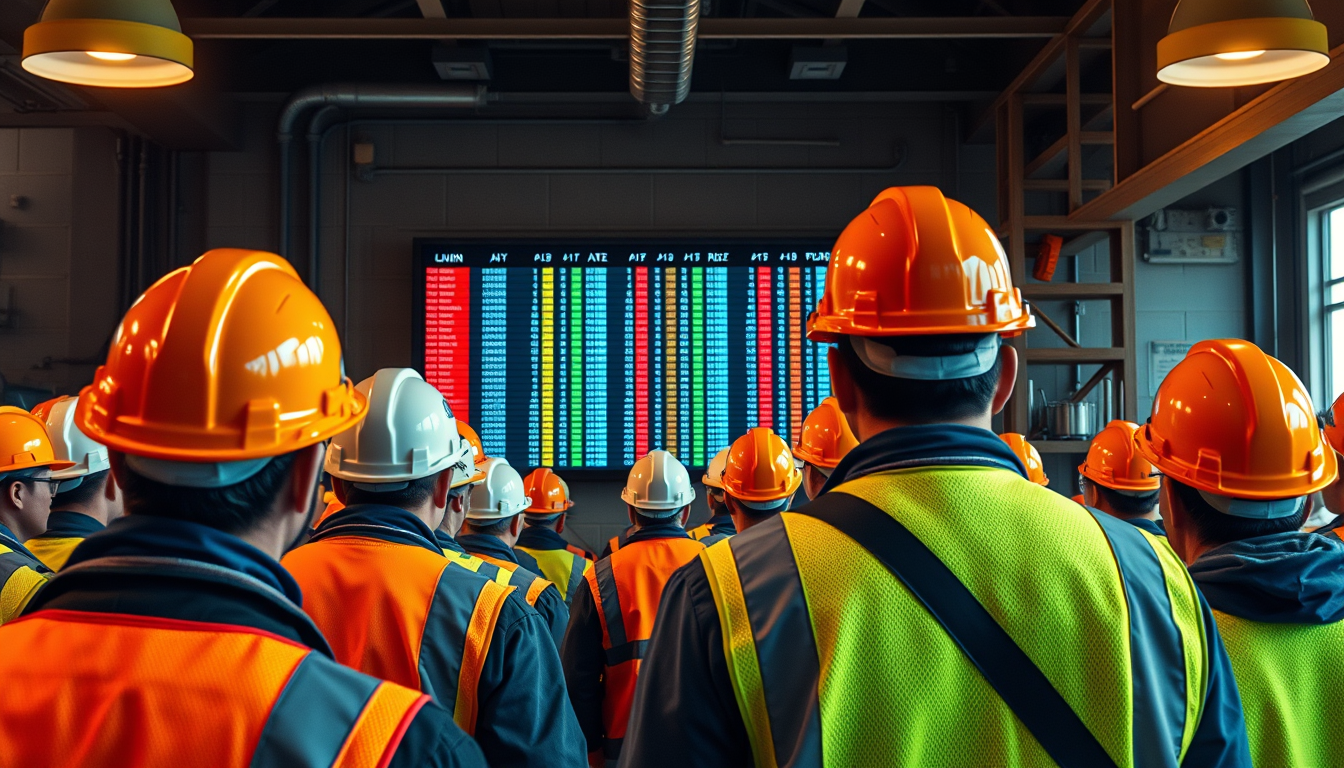
The DockOps flow board is the live status board for the day. It organizes vessels, gangs, job codes, seniority and member status, with live counts of positions needed, filled and remaining. Seniority is visible at a glance, and certification abbreviations appear against each member.
The flow board runs on the web and in the mobile app, and it can be shown on a screen in the union hall. When members can watch gangs fill in seniority order in real time, a lot of questions answer themselves before anyone asks them.
That's what transparency looks like in practice. Not a policy posted on the wall, but the process itself, visible to the people it affects.
The call-back list in every member's pocket
One of the biggest changes for members is knowing where they stand before they leave home.
DockOps maintains the call-back list in seniority order and puts it on every member's phone through the iOS and Android apps. Members can see their place, see work orders and start times, and get an alert when a work order posts. Dispatchers work the same list from the same view. When a gang needs a replacement, DockOps draws from the call-back list, and if the list is exhausted, dispatchers can record an alternative instead of being blocked.
The practical effect is fewer early-morning phone calls to the hall, less waiting around on the chance of a pick, and less frustration for everyone.
Check-in that respects the rules
Fair dispatch starts with accurate check-in. In DockOps, members check in and check off from the dock through the app, and locals can also use member cards at tap stations. Check-in respects membership windows, casual access rules and authorized call-in overrides.
For members who can't check themselves in, an authorized dispatcher can check in on their behalf. That capability is access-controlled, so only the roles the local grants it to can use it, and the action is recorded.
Where a gang requires a certification, members without a valid, active credential are blocked from checking in to it automatically. No awkward conversations at the gate, and no one placed somewhere they shouldn't be.
From the morning shape-up to a finished record
When a work order is finalized, DockOps closes out the day for that job. The timesheet is completed from the recorded dispatch and attendance activity. Checked-in members are notified by text message and push notification. The record is written to the audit log, and the flow board keeps its members after finalizing, so the finished record stays intact.
That's the connection most halls never had: the same activity that decided who went out also becomes the record of what they worked.
Built with the hall, not around it
DockOps was built by veteran software engineers working alongside ILA leaders with decades on the waterfront. Dispatch rotations, shape-up procedure and seniority enforcement weren't learned from a requirements document. They were lived.
That's why DockOps is configured around each local's own dispatch rules rather than copied from anyone else's setup. It doesn't automate anyone's job. It replaces the binder, the whiteboard and the guesswork, and leaves the people in charge.
The next time someone says "I should have gone out," your local can show them exactly what happened.
See dispatch set up your local's way. Book a demo at dockops.app/book.
— The DockOps Team